

A client I spoke with last year had run his digital agency from a serviced office in JLT for three years. Decent location, reasonable rent, but he was paying for a space he and his team used maybe two days a week. The rest of the time the overhead just ticked away, for the sake of an address on his business cards.
He ultimately switched to a virtual office dubai media city strategy powered by Workstation Center. He saved a significant amount of monthly capital, maintained an elite corporate address, and now simply books a premium meeting room whenever he needs to meet clients face-to-face. His clients—including large regional brands—haven’t batted an eye. That scenario plays out far more often than people expect, and it’s why the conversation around virtual offices in Dubai has fundamentally shifted. It used to be entirely about survivalist cost-cutting; today, it’s a strategic preference for how modern, agile businesses choose to operate.
Why Dubai Media City Specifically, and Does Location Still Matter?
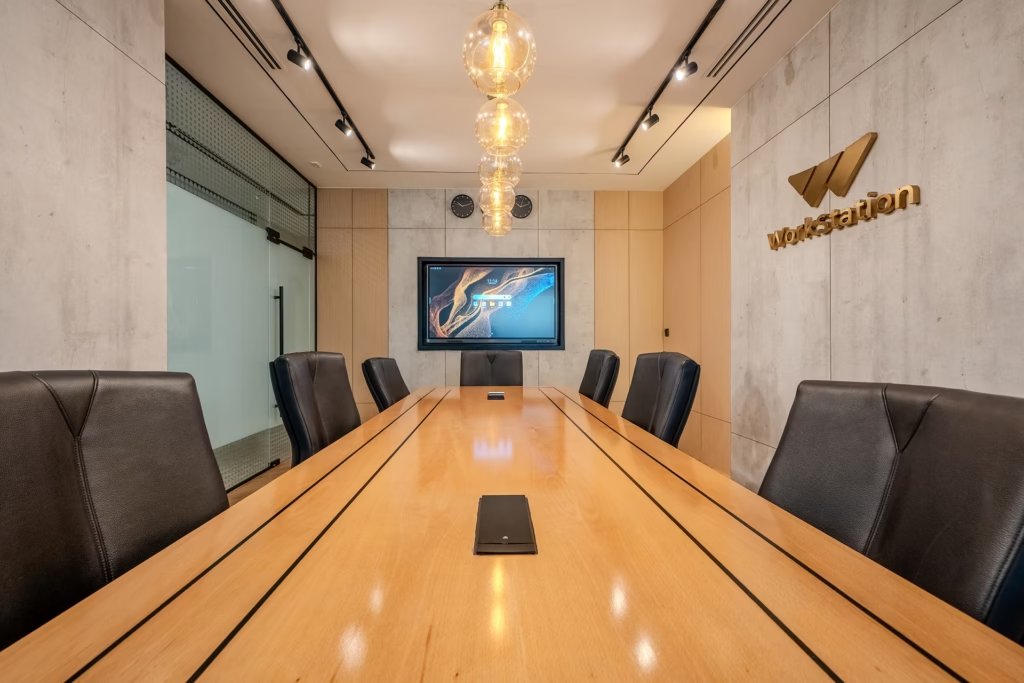
In a world of Zoom meetings and clients across time zones, does it matter whether your registered address is in Dubai Media City versus a less prominent postcode? Honestly, yes, more than people expect. Dubai Media City has a specific reputation, recognised locally and internationally as a serious business district full of media companies, tech firms, agencies, and consultancies. Put that address on a proposal or email signature and there’s a shorthand credibility you don’t get from a residential address or an obscure free zone.
This matters disproportionately early in a relationship. Clients often do a quick background check before a first call, they Google your address and form impressions before you’ve said a word. A virtual office Dubai Media City address doesn’t guarantee anything, but it doesn’t create doubt the way other options can. For international companies entering the UAE for the first time, it carries even more weight: you get credible local presence without committing to eighteen months of office rent before you’ve validated the market.
The Financial Argument, But It’s Not Just the Money
The obvious case is cost. A conventional office in Dubai Media City means a lease, furnishing, utilities, maintenance, and the friction of managing a space, meaningful capital that could go to hiring or marketing instead. A virtual office for monthly rent in Dubai eliminates most of that: you pay for a professional address, usually some mail handling, and access to meeting or coworking space when you need it, at a fraction of the cost.
But I’d push back on framing it purely as a saving. The more interesting argument is what you gain operationally. Not locked to a location, you can hire better people without restricting yourself to candidates willing to commute to one building five days a week. Your team works where they’re most effective. You can expand into new markets without building physical infrastructure first.
In Dubai right now, where the talent pool is international, the businesses attracting the best people tend to be the ones offering the most adaptive working conditions, not the nicest lobby.
Who’s Actually Using Virtual Offices (It’s Not Who You Think)
The persistent image is freelancers or very early startups using a virtual address as a placeholder. That’s out of date. Look at the client lists of established business centres offering Dubai virtual offices and you’ll find international companies running regional operations from a UAE address, established agencies gone fully remote that still need a professional address for client correspondence, ecommerce businesses that operate entirely online but need a registered presence, and consultants billing substantial day rates who’ve simply done the maths. What they share isn’t size or stage, it’s a deliberate choice about how they want to operate.
Virtual Office vs. Coworking, Worth Clarifying
These get conflated and they’re genuinely different. A virtual office gives you an address, mail handling, usually a receptionist or call-answering service, and maybe a few meeting-room hours a month, infrastructure for professional presence, not a daily workspace. A coworking space is the opposite emphasis: somewhere to actually sit and work, around other people, with a desk and wifi whether you show up or not.
Many businesses start with a virtual office and move into coworking or a private office as teams grow, virtual to coworking to be serviced to leased is a common Dubai growth path, and it makes sense: don’t take on physical overhead before you’ve validated you need it. The two can also run in parallel, a Dubai Media City address for official presence plus occasional coworking for the days working from home isn’t working. You’re not choosing one; you’re using each for what it’s good at.
What to Look For When Choosing a Provider
The address itself comes first, some buildings carry real market credibility, others technically qualify but don’t. If you specifically want a Dubai Media City presence, confirm the address is actually within the free zone, not just nearby; the distinction matters legally and reputationally.
Mail handling sounds minor until you miss something important, understand exactly how incoming correspondence is handled (scanned and emailed, held for collection, forwarded) and whether it fits how you operate.
Think through meeting-room access: professional rooms, easy booking, and a clear sense of whether hours are included or charged per use. And weigh scalability, the right provider is one you could later get a dedicated desk or private office from without starting the whole setup elsewhere.
The Licensing and Legal Side, Don’t Overlook This
It’s not the most exciting topic, but it’s arguably the most critical. Depending on your specific business activity, UAE licensing regulations will directly dictate your corporate workspace requirements.
While many consulting, tech, and creative services can operate seamlessly via a virtual setup or an Ejari-compliant arrangement, certain heavily regulated sectors still mandate physical, dedicated square footage. Before signing any agreement, verify that your specific activity category matches your intended workspace structure.
A reputable business center won’t just sell you a package; they will guide you through this legal framework. At Workstation Center, our corporate services team works directly with clients to ensure their license setup aligns perfectly with local regulatory guidelines—saving you from costly compliance bottlenecks later.
An Honest Look at the Limitations
People who moved away from virtual offices usually cite one of two things. Team size: once more than four or five people need to be in the same place regularly, the economics and practicality shift, ad hoc coworking stops working and you need a place that’s yours.
And certain client types: finance, legal, and regulated sectors sometimes have requirements or strong preferences around physical premises, and there the perception value of a virtual address may not fully substitute. Neither is an argument against virtual offices in general, they’re arguments for knowing your own situation before deciding.
The Practical Checklist Before You Sign
Confirm a few things before committing to any virtual office for monthly rent in Dubai: Is the address physically where it claims, and is that relevant to your licensing? What exactly does mail handling look like, and how fast are you notified? How are meeting rooms booked, what’s real availability, and what’s the true cost per hour? What’s the minimum term and the exit process? And can the same provider accommodate your next growth stage? Twenty minutes on a call answers all of it and saves a lot of friction later.
Done correctly, a virtual office in Dubai isn’t a compromise version of a real presence, it’s a deliberate choice to run an efficient, flexible operation while keeping the professional standing clients care about.
Dubai Media City adds a layer of credibility that’s hard to replicate with a generic or residential address. The businesses that struggle almost always choose the cheapest option without thinking through the specifics; the ones that find real value treat it as a proper strategic decision.
Frequently Asked Questions
Is a Dubai Media City address worth it for a virtual office?
Yes, it’s a recognised, credible business district. The address signals seriousness to clients and partners in a way a residential address or obscure free zone can’t, which matters most early in a relationship.
Can I register my business with a virtual office in Dubai?
Often, but it depends on your activity and license type. Some activities require physical premises; many can use a virtual address. Verify compatibility with the relevant free zone or mainland authority before committing.
How much does a virtual office in Dubai Media City cost?
Far less than a conventional office, you pay for the address, mail handling, and usually some meeting-room access on a monthly basis. Confirm what’s included versus charged per use before signing.
What’s the difference between a virtual office and coworking in Dubai?
A virtual office provides a professional address and mail handling without a daily desk; coworking provides a physical place to work. Many businesses use both, the address for presence, coworking for the days they need space.