
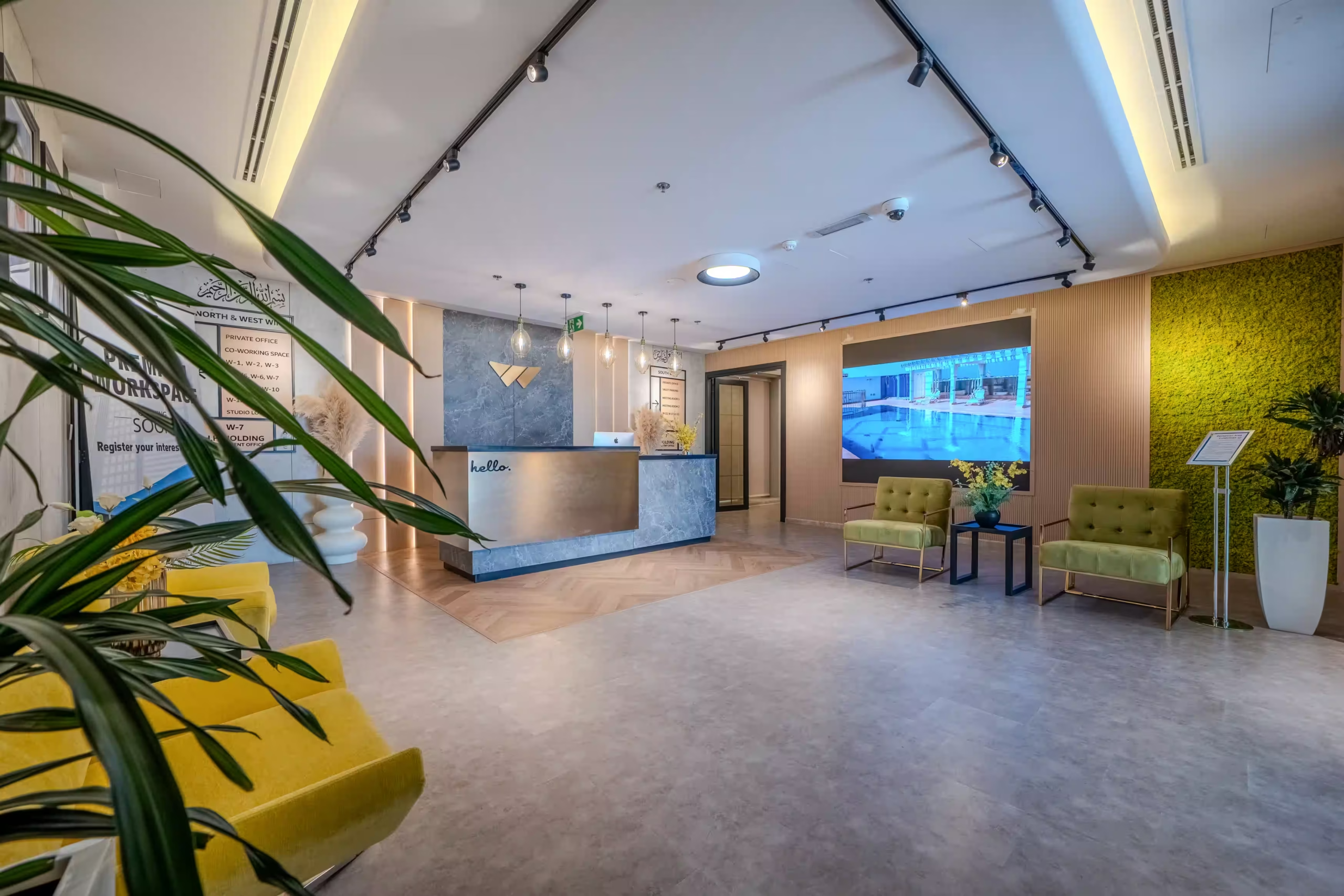
I heard almost the exact same story three times in a few months last year. Three freelancers—a copywriter, a video producer, a small UX consultancy—all arrived at the same conclusion by slightly different routes. They’d tried working from home; it worked for a while, then it didn’t. They tried cafés; that lasted about a week. They tried a cheap shared desk somewhere inconvenient; fine until it wasn’t. Then all three landed at a proper coworking space dubai media city hub like Workstation Center and described it in almost identical terms: why didn’t I do this earlier?
That pattern isn’t a coincidence. There’s something specific about how freelancers in Dubai eventually land on coworking, and it’s worth unpacking honestly, not as a sales pitch, but as a real account of how the economics and the psychology actually work.
The Home Office Problem in Dubai Is a Bit Different
Working from home has real advantages, no commute, full schedule control, the ability to work at 6am if that’s your flow. For plenty of people it’s genuinely the best setup. But Dubai adds a layer that doesn’t get discussed enough: the summer is extreme. There are months where going anywhere outdoors feels like a chore, where your whole world can shrink to your apartment, and where the psychological weight of the same four walls is heavier than in a milder city. A freelancer in London can take a fifteen-minute reset walk at noon; a freelancer in Dubai in August is less enthusiastic.
The result is that the isolation in any remote setup, the blurring of work and personal time, the erosion of routine, the disconnection from the professional world, arrives faster and hits harder. That’s a real driver behind how quickly Dubai coworking culture has grown. It’s not just desk space; it’s what happens to your mental state when home stops feeling like home because it’s also your office, your meeting room, and the only place you’ve been for three days.
Cafés: A Two-Week Solution at Best
Almost every Dubai freelancer has a café phase. It feels addictive at first, scenery, coffee, background noise, the mild social pressure of being in public. For two weeks, sometimes a month, it works. Then the wifi drops during a client call. Then there’s nowhere to sit on a Tuesday afternoon. Then you’re having a discreet argument with yourself about whether it’s acceptable to hold a four-seat table for four hours on one Americano.
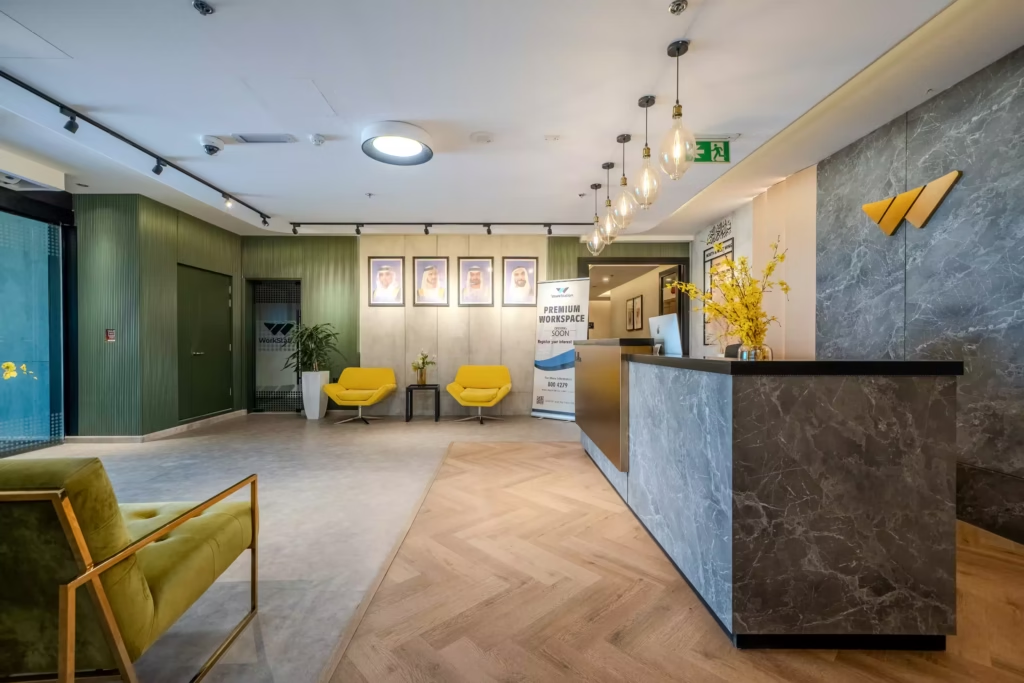
For occasional sessions, cafés are fine; as a primary workspace for serious deadlines and client relationships, they fall apart. Unreliable internet alone is disqualifying for video calls and large uploads. Securing a reliable coworking space dubai media city plan at a workspace like Workstation Center eliminates all of that friction: you know where you’ll sit, you know the internet works, you can take a call without whispering in a corner. Those aren’t luxuries, they’re the baseline for professional work.
Why Dubai Media City Specifically
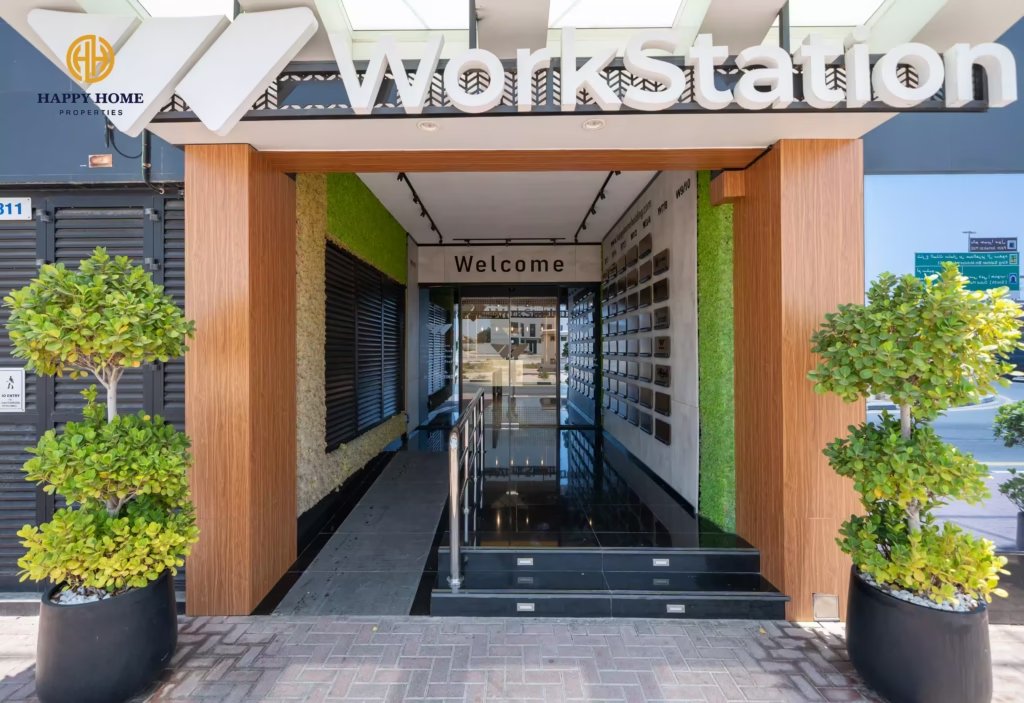
Not all coworking is equal, and location matters more than people account for. Dubai Media City has attracted media companies, digital agencies, creative studios, consultancies, and tech businesses for years. Working from an established coworking space dubai media city facility puts you near a specific professional community that’s more likely to be relevant to your work than a generic business park.
That matters in non-obvious ways: the casual conversations in a shared kitchen or while waiting for a meeting room are different when the people are in adjacent industries, you pick up who’s hiring, what clients want, what tools people use, what’s working right now. It’s not formal networking; it’s just what happens around related work. And for freelancers in media, marketing, content, digital, or creative fields, the address itself is genuinely recognised, “Dubai Media City” lands differently on a client call than “I work from home.”
The Productivity Question, Environment Genuinely Matters
I’ll skip the philosophy and land on the practical point: when you show up to a dedicated workspace, your brain accepts more readily that it’s time to work. When home is also your office, the switching cost between “relaxing” and “working” is higher than it looks, the couch, the kitchen, the bed twelve feet away.
Freelancers disciplined enough to overcome that consistently are exceptional; most people aren’t, and shouldn’t have to be. Walking into a dedicated environment like Workstation Center sets a context your brain works with: you’re there to work, others are too. The overhead of starting drops, and that tends to improve output quality, not just quantity. I’ve spoken with freelancers who attribute fewer missed deadlines and better work simply to having a consistent place to go each morning, nothing else changed.
The Isolation Problem Nobody Names Loudly Enough
Freelancing is sold on freedom; the trade-off is less discussed. Working independently through screens, you can go a full week without a single substantive in-person conversation with another professional. For some personalities that’s fine indefinitely; for most it wears.
The creative erosion surprises people, you expect loneliness, but you don’t anticipate your ideas getting smaller when they’re not bumping against other people’s. Coworking restores some of that without anything formal: low-stakes interactions, no aggressive networking expected, but the accumulated effect over time is meaningful. Freelancers a year into a proper coworking setup often describe genuine professional connections, collaborators, referrals, even clients, that came from nothing more intentional than being around the same people regularly.
On Flexibility, The Thing Freelancers Worry About Most
The hesitation I hear most is commitment. People chose freelancing precisely to avoid being locked in, and paying monthly for a workspace feels uncomfortably close to the office they left. Worth addressing directly: most good coworking spaces in Dubai offer genuinely flexible structures, hot desks, day passes, monthly memberships cancellable with reasonable notice, part-time arrangements for three days a week.
The model has evolved well past annual-membership-or-nothing. For a full-time freelancer managing real client work, choosing a hot desk in a premium coworking space dubai media city hub like Workstation Center tends to look very manageable against the value of consistent productive hours. If switching from café-hopping adds even two or three focused hours a day, the maths on the membership is usually straightforward.
Client Meetings, The Underrated Advantage
One scenario where coworking access pays off more than people expect: the in-person client meeting. Some clients want to actually meet, and while the substance matters most, the setting shapes the impression. Meeting in a professional environment with a reception area and a clean meeting room communicates something different than a café where you’re hoping the back seats are quiet. For freelancers building long-term relationships with corporate or larger clients, that perception of professionalism and stability is hard to replicate otherwise, and it’s available without taking on your own office overhead.
The Honest Version of When Coworking Doesn’t Work
It isn’t right for everyone. If you do your best work in complete silence and ambient activity is more distraction than stimulation, a private office or focused home setup may serve you better, sustained deep-focus work needs a consistency of quiet that’s hard to guarantee in a shared space. If your work involves a lot of confidential information or sensitive calls, think through whether the privacy is genuinely adequate. And if your schedule is truly irregular, twenty hours one week, sixty the next, a fixed monthly membership looks different against a pay-as-you-go arrangement. These aren’t arguments against coworking; they’re arguments for choosing the right setup and provider for your actual work patterns.
Summary
There’s a reason freelancers who try a good coworking setup usually stick with it, not because it’s the only way to work, but because it solves the problems that accumulate quietly when you work alone: isolation, environmental drag, lack of structure, friction around client meetings. Dubai Media City adds a professional character relevant to creative, media, digital, and consulting work. It’s not just a desk; it’s a context. If you’ve been on the fence, or tried one that didn’t fit and wrote the concept off, it’s worth another look at what the options at Workstation Center actually look like now.
Frequently Asked Questions
Is a coworking space in Dubai Media City good for freelancers?
Yes, especially in media, marketing, creative, digital, and consulting fields. Utilizing a coworking space, dubai media city layout provides reliable infrastructure, a recognised professional address, and proximity to a relevant community that often leads to referrals and collaborations.
How much does a coworking space in Dubai Media City cost?
It varies by access level, hot desks and day passes are the most affordable, with monthly memberships and dedicated desks costing more. For a full-time freelancer, a hot desk usually pays for itself in added productive hours.
Is coworking better than working from home in Dubai?
For many freelancers, yes, particularly during the extreme summer, when home isolation hits harder. Coworking provides structure, reliable internet, and professional interaction that home and cafés can’t reliably match.
Are coworking memberships in Dubai flexible?
Most are. You’ll find hot desks, day passes, part-time plans, and monthly memberships cancellable with reasonable notice, far more flexible than the early annual-commitment model.